
Perimenopause & Sexual Health
If you’re a cisgender woman in your 40s or older, you may have noticed changes in your sexual desire, arousal, comfort, or pleasure that coincide with the hormonal changes of perimenopause. Understanding how perimenopause can affect sexuality may help you make sense of these changes and find forms of care and support that fit your needs, whether you’re partnered or single.
Menopause represents one point in a much longer transition. Technically, menopause refers to the point when you have gone 12 consecutive months without a menstrual period, assuming no other cause explains the absence of menstruation. Perimenopause refers to the years leading up to menopause, when hormonal and menstrual changes begin. Postmenopause describes the years following menopause. Although menopause itself marks a single point in time, the physical, emotional, and sexual changes associated with the transition can unfold over many years.
Perimenopause and Sex
Perimenopause can bring changes in your menstrual cycle along with symptoms such as hot flashes, night sweats, insomnia, brain fog, fatigue, changes in mood, anxiety, irritability, vaginal dryness, and changes in sexual desire.
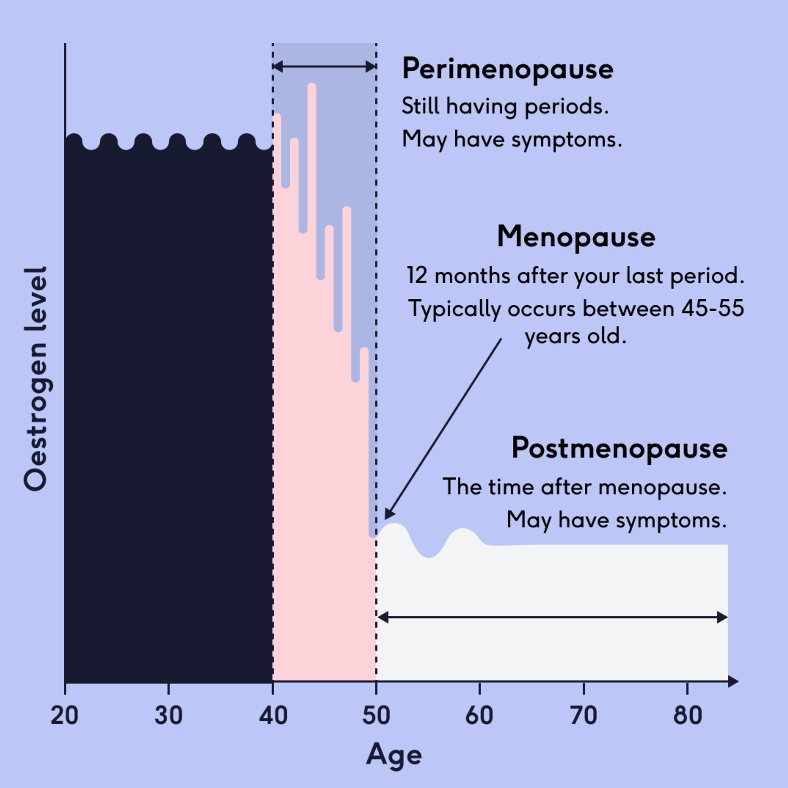
This graph from The Lowdown shows us how estrogen fluctuates with age.
Many of these changes relate to fluctuations in estrogen and progesterone as ovarian function becomes less predictable. As the number of eggs remaining in the ovaries declines, ovulation becomes less consistent.
Estrogen levels can fluctuate considerably during perimenopause, while progesterone production generally decreases as ovulation becomes less frequent. These hormonal changes can affect sleep, mood, energy, vaginal and genital health, and sexual wellbeing.
Perimenopause and postmenopause can look different for every person. You may notice changes that feel unfamiliar or difficult to explain, especially when you do not realize that hormonal changes may be contributing to your experience. Your body may be asking for different forms of care than you needed earlier in adulthood. If you notice changes in your menstrual cycle, sexual wellbeing, mood, sleep, or other aspects of your health, consider talking with your gynecologist or another healthcare professional about your symptoms and available treatment options. Consider searching for a Certified Menopause Provider through the directory on our website.
Sexual desire can also change during perimenopause and postmenopause. Some women experience an increase in desire, while others experience a decrease or notice that their pattern of desire has changed. Hormones can play a role, but sexual desire also reflects many other factors, including sleep, stress, mood, medications, physical comfort, relationship dynamics, and overall wellbeing.
Some women notice less spontaneous desire during midlife and find that desire emerges more often in response to emotional closeness, physical touch, erotic stimulation, or other forms of arousal. Some people experience both spontaneous and responsive desire, and patterns can change throughout the lifespan. Understanding your own pattern can help you move away from comparing your current sexuality with earlier experiences and toward discovering what supports pleasure and connection now.
If you want to learn more about perimenopause and postmenopause, explore educational resources from the non-profit let’s talk menopause!

Supporting Sexual Health During Perimenopause
Changes in hormones and blood flow can affect genital tissues and sexual comfort during perimenopause and after menopause. Some people experience vaginal dryness, irritation, changes in sensation, or discomfort with penetration. Sexual arousal can also take longer or require different types of stimulation than you have experienced in the past.
If genital stimulation or penetration feels uncomfortable, you do not need to push through the discomfort. Slowing down, spending more time on arousal, using a lubricant, and choosing forms of sexual activity that feel comfortable can make sexual experiences more pleasurable. Some people also benefit from vaginal moisturizers or medical care for persistent vaginal or genitourinary symptoms. A healthcare professional can help you understand the available options if dryness, pain, or other symptoms continue.
You may also discover that the pace or types of sexual activity that felt good earlier in life no longer feel as satisfying. Rather than treating these changes as a problem, consider them an opportunity to become curious about what your body enjoys now. You might need more time for arousal, different kinds of touch, more direct stimulation, or a different pace. You may also discover new forms of pleasure that have little to do with what previously worked for you.
Midlife can offer an opportunity to become more attentive to your body's signals and to let go of expectations about how sex is supposed to look or feel. Whether you are exploring sexuality on your own or with a partner, you can choose the pace, activities, and forms of touch that feel pleasurable and meaningful to you now.
Sexual wellbeing does not depend on maintaining the same level of desire, arousal, or sexual activity throughout your life. Perimenopause can bring changes, and change can create opportunities to understand your body more deeply, communicate more openly, and discover new ways of experiencing pleasure and intimacy.
